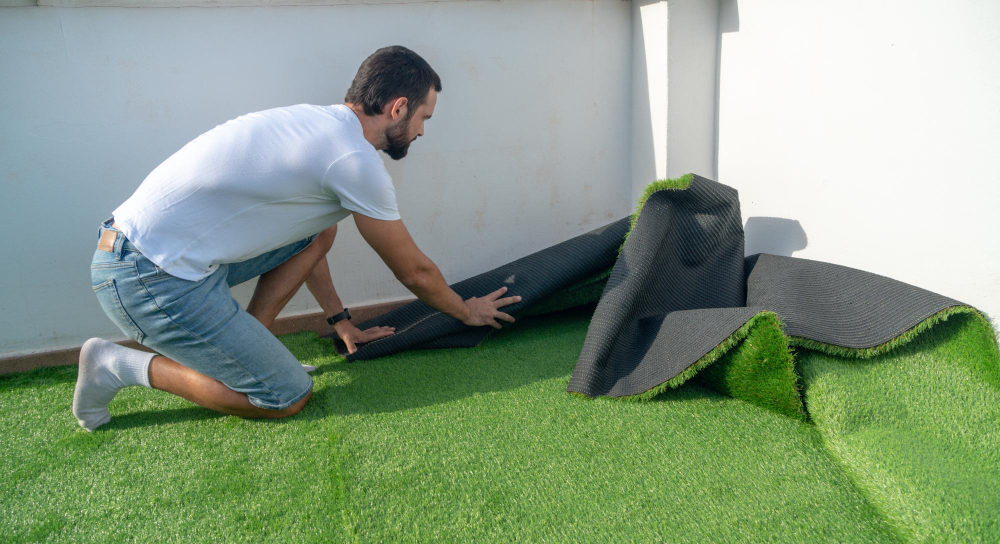
Yes, artificial grass needs drainage. Rainwater must pass through or beneath the turf and then leave the installation area. Artificial grass drainage depends on the backing, the prepared base and the ground below.
Replacing a patchy lawn with synthetic grass will not automatically solve an existing waterlogging problem. The reason water collects needs to be understood before installation.
How Does Water Move Through Artificial Grass?
Many artificial grass products have drainage openings in their backing. These allow rain or cleaning water to pass through the surface. However, the water still needs a route onwards. A backing that drains freely cannot compensate for an unsuitable base or ground that stays saturated.
Ask the supplier how the chosen product drains and whether it suits your site. A product’s drainage specification describes the turf, rather than guaranteeing the performance of your garden.
What Happens Underneath the Turf?
The Prepared Ground
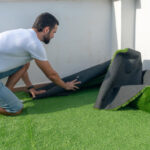
Existing grass and unsuitable material usually need removal before the base is formed. The installer should assess low spots, soil conditions and where water currently collects. For example, if rain pools beside a courtyard door, covering the area with artificial grass leaves the issue unresolved.
The Supporting Base
A suitable, compacted aggregate base supports the turf and helps prevent movement. Its material, depth and levels need to suit the site and installation system. SYNLawn’s installation guidance includes base preparation and compaction. These requirements vary between products and sites, so confirm the proposed construction method.
The Drainage Route
Water may soak into suitable ground or require a designed route to an appropriate outlet. Slow-draining soil and enclosed courtyards need attention. Additional drainage may be necessary, but a pipe is useful only when it has somewhere suitable to discharge.
Can Artificial Grass Drain Over Concrete?
Yes, provided water can escape beneath the turf. The concrete should be checked for dips, cracks and existing drainage problems before it is covered. A drainage layer may be appropriate for some installations. Adhesives, joins and edging must also be planned so they do not obstruct the intended water path.
SYNLawn advises checking drainage and surface condition before installing artificial grass over concrete or paving.
What Should You Ask Before Installation?
Before accepting a quote, ask:
- Where will rainwater go after passing through the turf?
- What base preparation is included?
- Does the site need additional drainage?
- How will existing drains remain accessible?
- What cleaning routine suits the proposed product?
For pet areas, drainage and cleaning need consideration together. Removing solid waste promptly and following the supplier’s rinsing guidance helps manage hygiene and odours. synlawn.com.au
After installation, clear leaves and debris as recommended. Persistent puddles, lifting edges or soft patches warrant inspection rather than surface cleaning.
Plan the Base Before Choosing the Finish
Evolution Fencing Solution is based in Tarneit. Explore our artificial grass installation service and share photos showing any wet areas or uneven ground. Get in touch to discuss your outdoor space and installation requirements.
- By @dmin
- No Comments